
 Ultra
Ultra
Ultra
ESL lesson
Farming Without Fields
Students follow the process inside a robot-powered vertical farm, practise passive process language and sequencing, explain unfamiliar production systems, analyse trade-offs, and recommend where a new farm should be built.
- Level
- B2 / Upper Intermediate
- Time
- 110–125 min
- Format
- Video Lesson / Functional Language
Lesson materials
Choose the resource you want to use in class.
Lesson overview
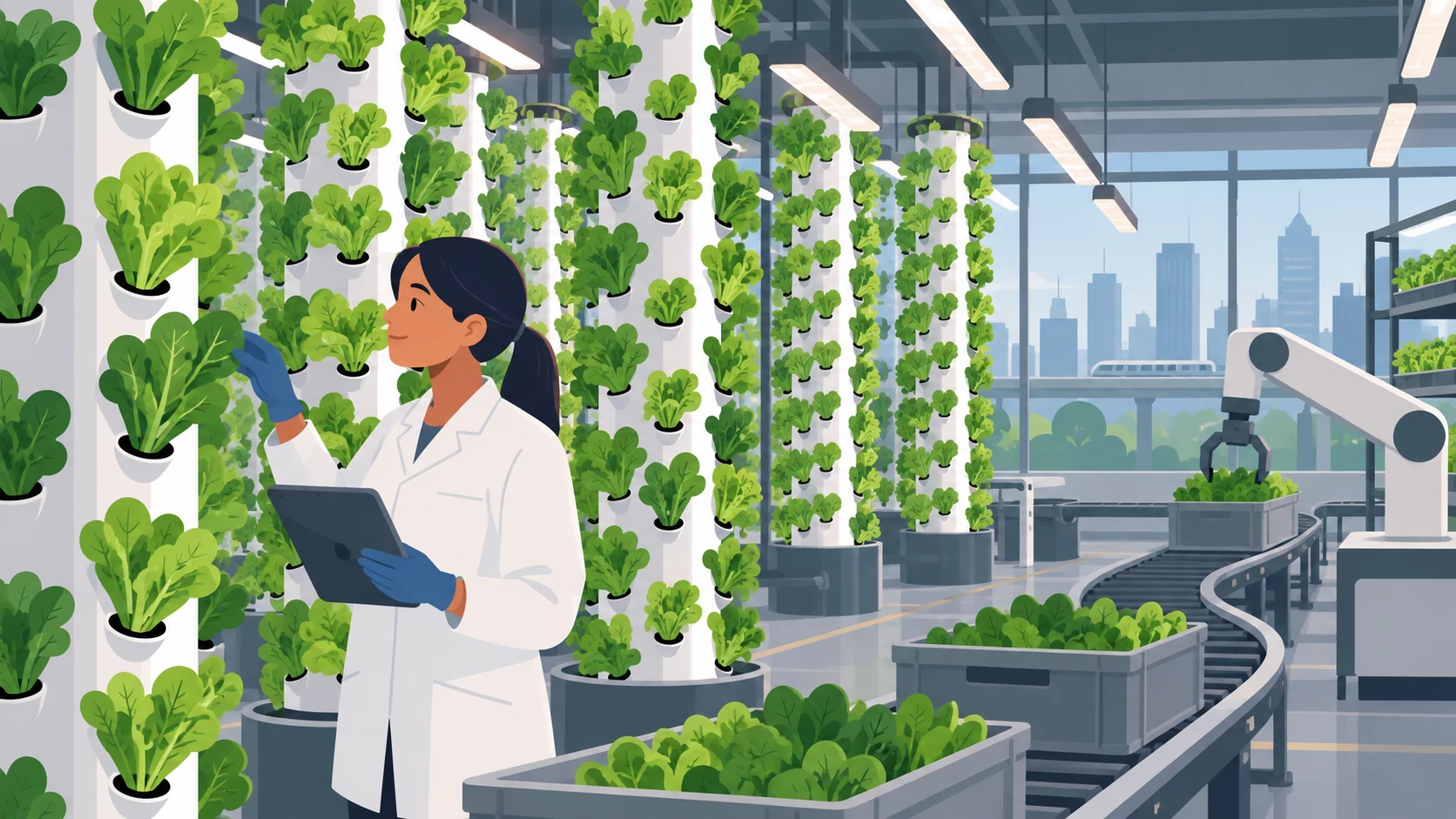
This B2 lesson follows a CNET visit to a highly automated vertical farm in California and asks a practical question: how can food be grown when farming moves indoors? Students connect familiar farming needs with an unusual production system and use the video to understand how plants move from seed trays to harvest and quality control.
Learners build useful farming and technology vocabulary, complete gist and detail viewing, reconstruct the growing and harvesting process, and analyse how robots, conveyor systems and controlled lighting support the work. They review and use the passive voice with purpose language, practise sequencing through three unfamiliar production processes, and explain how meaning transfers beyond the video.
In the final location task, learners compare four fictional profiles and prepare a supported recommendation for where a vertical farm could be built. They weigh available space, distance to consumers, outdoor growing conditions, electricity and existing local food supply, then defend a decision with evidence and acknowledge a drawback. The core print lesson takes approximately 110-125 minutes. Ultra members also get access to Production Tour, a substantial classroom digital board game in which teams travel between factories and production sites, complete increasingly demanding process-language challenges, and use sequencing and the passive voice to explain how products are made. The game is an additional extension with a variable classroom duration.
Learning outcomes
By the end of the lesson, students can:
Understand the main idea and selected supported details in the approved 0:18-3:47 excerpt.
Use vocabulary for crops, propagation, growing conditions, automation, lighting and renewable energy.
Explain the journey from seeds to robotic harvest and quality control.
Use process passive, purpose language and sequencing to explain how systems work.
Compare locations and deliver a 60-90 second recommendation with a trade-off.
Teaching at a glance
The essentials for planning this lesson.
- Level
- B2 / Upper Intermediate
- Teaching time
- 110–125 min
- Language
- Grammar · Vocabulary · Functional Language · Advanced Lexis
- Skills
- Listening · Reading · Speaking · Critical Thinking
- Topic
- Technology
- Format
- Video Lesson · Functional Language
Lesson structure
A practical sequence from warm-up to final task.
-
Understand the system
Students activate farming knowledge, learn key vocabulary and identify the main idea of the vertical-farm report.
-
Follow and evaluate
Students reconstruct the growing and harvesting process, then weigh benefits, challenges and energy trade-offs.
-
Compare and recommend
Students compare outdoor and vertical farming, then make a supported recommendation for a fictional location.
Lesson materials
Everything is here when you are ready to teach.
Teacher feedback
Teacher feedback & discussion
Share how this lesson worked in class, ask a question or suggest an improvement.
Want to join the discussion?
Sign in or create a free Standard account to leave feedback or ask a question.
Discussion
No contributions yet. Be the first to share how this lesson worked in class.
You might also like
More lessons selected from the EasyESL library.